
Sometimes, it seems like there is nothing good in this world. We are faced with constant negativity, rejections, obstacles, and illness. It is hard, and what hope we have starts to fade. We’ve all been there, discouraged, wanting things to improve but not knowing how or when waiting for what feels like an eternity with no answer as time races on.
It isn’t nice, it’s draining. In such moments, we usually choose one of two paths. We either turn to God in our desperation, begging for help, or we turn away from Him because He hasn’t answered our prayers yet, so why bother trying again?
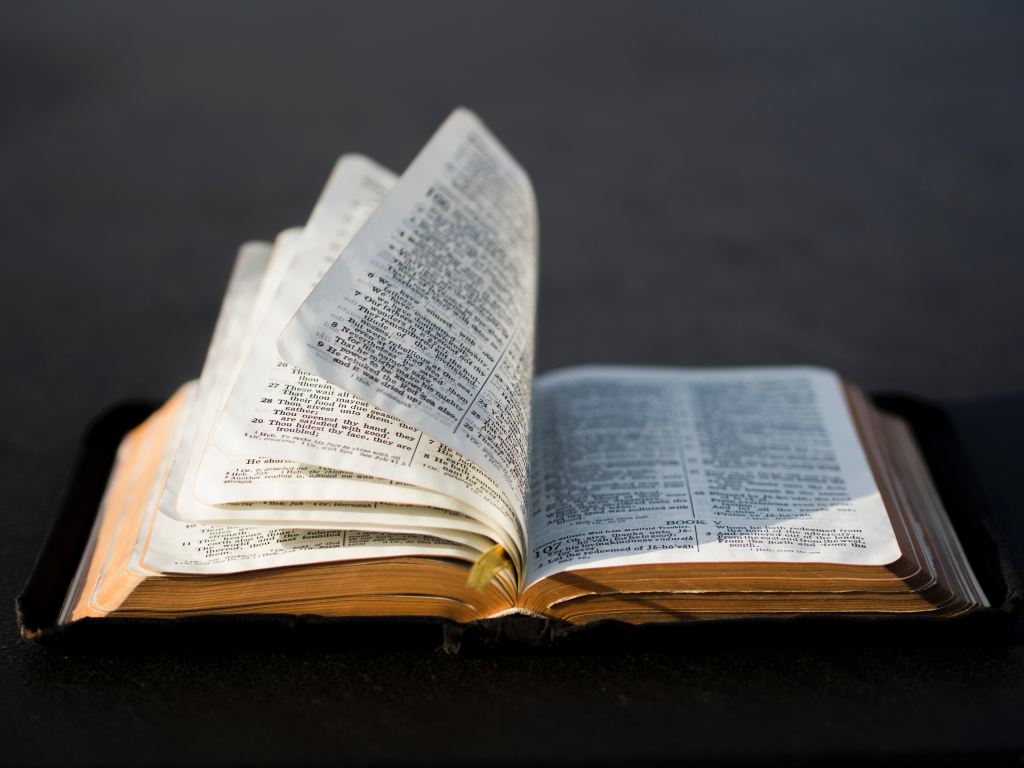
God wants us to come to Him. He wants to help and comfort us in our difficulties. He gave us the Bible so that through it, we could find answers and comfort in the knowledge that our ancestors were just as imperfect as we are, yet God still brought them through their trials. He gave us the Bible so we could learn to hear His voice and discern His voice from our thoughts and the devil’s manipulations. The Bible is our guide to the life God always intended for us. A way for Him to show His love, mercy and grace. A way to comfort and convict us. A way to remind us that He has always kept His promises.
So, if you have been waiting for a sign or an answer to your prayers, be assured that God has heard you, and He will answer you. His timing is just different from ours and is perfect. Please be patient; perhaps it is not the right time, or He has something better for you.
There are many stories in the Bible of people who have been discouraged. I am going to talk about four occasions.
JOSHUA – DEFEAT AT AI
The first tale I will tell you about focuses on Joshua, son of Nun. As Moses’ successor, he had big shoes to follow. After Moses’ death, God instructed Joshua to lead the Israelites across the Jordan River into the Promised Land. This led to the famous conquest of Jericho.
In Chapter 1 of Joshua, we read of God’s promise to Joshua – that He would not leave or abandon them and would make sure that no one could stand against them. He also warned them to obey His instructions, or trouble would follow. The Lord kept His promise to the Israelites, and as we all know, Jericho was conquered.
The city and everything in it were meant to be set apart for destruction (Joshua 6:17). The Israelites had been warned that if they were to take anything, they would be set apart for destruction just as Jericho had been (Joshua 6:18). You can probably guess what happened next.
Some things were stolen, so the Israelites were doomed for destruction; this led to their defeat at the Battle of Ai. Their defeat was inevitable because of their sin and disobedience. This was the reason for Joshua’s discouragement.
Knowing that someone in their camp had disobeyed God’s command and doomed them for destruction, Joshua did the only thing he could do. He fell on his face and prayed.
“Alas, Sovereign Lord, why did you ever bring this people across the Jordan to deliver us into the hands of the Amorites to destroy us? If only we had been content to stay on the other side of the Jordan! Pardon your servant, Lord. What can I say, now that Israel has been routed by its enemies? The Canaanites and the other people of the country will hear about this, and they will surround us and wipe out our name from the earth. What then will you do for your own great name?”
Joshua 7:7-9
Even in his despair, Joshua still put God before his own desires. Would you do the same? We all should, and we know it, but too often, we let our emotions get in the way. Joshua turned to God in the face of what he thought was certain death, and God, in His mercy, gave them the opportunity to repent. So, despite being discouraged, hope wasn’t lost.
Whatever discourages you today, have you turned to God? Have you poured out your hopes and fears to Him? I encourage you to do so. You may not be facing impending doom like Joshua, but that doesn’t make your challenge any less difficult. Turn to God, and He will answer you in time. He will reward your faithfulness and give you hope. Perhaps He will give you a second chance, just as He gave the Israelites another attempt at conquering Ai. That attempt was successful because God was with them and not against them, for they had repented of their sin.

NAOMI – CALL ME MARA
This second tale may be more familiar one to you. This time, coming from the book of Ruth, it is, in fact, Ruth’s mother-in-law who is the focus of this tale of discouragement.
Naomi lived in Bethlehem with her husband, Elimelech, and her two sons, Mahlon and Chilion. Then, a famine came over the land, and they left to live in Moab for a while. Mahlon and Chilion married Moabite women named Orpah and Ruth.
During their time in Moab, Naomi lost her husband and sons. She became bitter and set out to return to Bethlehem now that the famine had passed. Her daughter-in-law Ruth refused to leave her and joined her in Bethlehem. Naomi, on arrival to Bethlehem, insisted on being called Mara, which means bitter.
“Don’t call me Naomi. Call me Mara, she answered, for the Almighty has made me very bitter. I went away full, but the Lord has brought me back empty.”
Ruth 2:20-21
Widowed and childless, in her situation, you’d be discouraged, too, but God has a plan and a purpose for everything.
Had famine not come into the land, Naomi and her family would not have moved to Moab, and Ruth wouldn’t have married her son. They probably wouldn’t have returned to Bethlehem if her sons hadn’t died. If Ruth hadn’t returned to Bethlehem with Naomi, she wouldn’t have become Boaz’s wife and given birth to his child. If Obed hadn’t been born, King David wouldn’t have been born to Obed’s son Jesse, and we know that Jesus came from David’s line.
Everything happens for a reason; without these events, the Bible wouldn’t be what we know today.
Naomi thought she’d lost everything, but God gave her a new family in Ruth and Boaz and a new hope in her grandson Obed. Her life may not have turned out as she expected, but the truth is that life rarely does. If things aren’t going as expected, don’t despair; there is a reason. Perhaps in the future, it will all become clear. Your plan and God’s may differ, so submit your desires to Him and let Him lead you where you should be. Naomi never gave up, and neither should you. Remember that God’s power is perfected in weakness, His grace is sufficient (2 Corinthians 12:9).
“So we do not focus on what is seen, but on what is unseen. For what is seen is temporary, but what is unseen is eternal.”
2 Corinthians 4:18

DAVID – A CRY FOR HELP
From lowly origins as a shepherd to becoming a great king. David was no stranger to discouragement. He faced down the Philistine giant Goliath and faced death from various enemies, but he turned to God through it all. David also penned many Psalms, including the one we’ll focus on, Psalm 143, entitled ‘A Cry for Help.’
We do not know what David faced when he wrote this psalm, and we don’t know when; it could be before he became king or after his son deposed him. What we do know is that he was in anguish. He was crying out to God because of the pain he felt deep in his soul.
“Lord, hear my prayer. In your faithfulness listen to my plea, and in your righteousness answer me… For the enemy has pursued me, crushing me to the ground, making me live in darkness like those long dead. My spirit is weak within me; my heart is overcome with dismay.”
Psalm 143:1,3-4
David felt crushed, distressed, overwhelmed, like living in darkness. He thought he couldn’t last long without an answer or intervention from God. I’m sure you can think of times when you felt the same, and it seemed like there was no solution. What did you do? Curl up in a ball and cry? We’ve all been there; I’m sure David did that too. However, David also turned to God, the only one who could help him. David knew he wasn’t strong enough without God, so he asked for the strength to endure. He was insecure, so he asked for reassurance. He didn’t know what to do, so he asked for guidance. He was in danger, so he prayed for protection.
We can do the same. We can turn to God in our discouragement, in our trials. God will protect us, guide us, reassure us. Whatever we need, God can provide, but if we don’t ask, we won’t receive.
“Answer me quickly, Lord; my spirit fails. Don’t hide your face from me, or I will be like those going down to the Pit. Let me experience your faithful love in the morning, for I trust in you. Reveal to me the way I should go because I appeal to you.”
Psalm 143:7-8
David also prayed for revival but not for his own benefit. He prayed for renewal for God’s sake because he knew that his desires were meaningless in the face of God’s glory. David recognised that God deserves to be praised, and if he were revitalised, God would be glorified.
“Teach me to do your will, for you are my God. May your gracious Spirit lead me on level ground. For your name’s sake, Lord, let me live.”
Psalm 143:10-11
We know David’s prayers were answered because the following Psalms are more cheerful and full of life and hope. For example, Psalm 145 is called ‘Praising God’s Greatness’, and while David did so in his despair, in his joy, he praised God even more.
“The Lord is great and is highly praised; his greatness is unsearchable. One generation will declare your works to the next and will proclaim your might acts. I will speak of your splendour and glorious majesty and your wondrous works.”
Psalm 145:3-5
No matter what we face, we should be more like David, wholeheartedly praising and trusting God in every situation.

JUDAH – A PEOPLE IN PAIN
Lamentations is one of those books with a reputation for being quite depressing. It is in the name, after all. It is the final occasion of discouragement we will be exploring.
Lamentations was written by the prophet Jeremiah after the third deportation of the people of Judah to Babylon in 586 B.C. King Nebuchadnezzar destroyed Judah, and the pain and suffering endured by the people have made it one of the darkest periods in Jewish history. Jeremiah details the extremes of pain vividly, as few writers had done then.
“Zion’s gates have fallen to the ground; he has destroyed and shattered the bars on her gates. Her king and her leaders live among the nations, instruction is no more, and even her prophets receive no vision from the Lord.”
Lamentations 2:9
Death was rampant throughout Judah, for it was not just Jerusalem that was destroyed but many other towns in Judah, too. People of all ages died, even the children, by the sword, by hanging, and by starvation (Lamentations 1:20, 2:21). Women were raped, and boys were forced to work (Lamentations 5:11-13).
“Those slain by the sword are better off than those slain by hunger, who waste away, pierced with pain because the fields lack produce. The hands of compassionate women have cooked their own children; they became their food during the destruction.”
Lamentations 4:9-10
The conditions they had to endure were unspeakable. Discouraged is the kindest word for the situation they were in. Even today, there are people in the world who have or are experiencing something similar, which is shocking and sad. It is sad to think of so much pain and suffering, yet it exists.
Even in these dark times, the people didn’t lose hope, which seems surprising. They knew they had sinned, and this was their punishment.
“Let us examine and probe our ways and turn back to the Lord. Let us lift up our hearts and our hands to God in heaven: “We have sinned and rebelled; you have not forgiven.”
Lamentations 2:40-42
They believed in the Lord’s faithfulness and that, in time, their suffering would end.
“For the Lord will not reject us forever. Even if he causes suffering, he will show compassion according to the abundance of his faithful love. For he does not enjoy bringing affliction or suffering on mankind.”
Lamentations 3:31-33
This knowledge tempered their pain; it kept them from being overwhelmed and gave them hope, or at least helped them keep a little hope.
These are things which we can apply to our own lives. We can trust in God’s promises and faithfulness with hope, knowing that whatever we face is only temporary because God does not like causing us pain. We can learn from our mistakes and change our lives to be less sinful. We can ask for forgiveness and praise Him amid our discouragement.
“(Discouragement) Can be temporary-or it can destroy our life. The choice is ours. If we refuse to deal with discouragement head-on, we are opening the door for it to completely dominate our life.”
Charles Stanley
This brings us to the end of our exploration into discouragement in the Bible. As I mentioned in the beginning, many other Bible stories feature discouragement, and I would encourage you to read them. Genesis, Exodus, Jonah and 2 Kings all contain stories of discouragement, which may be an encouragement to you, but there are many more.
Let’s recap on some strategies we can use in our discouragement. First up is prayer; when we pray, we can vent to God about how we feel and ask for help, patience and hope. We can praise Him for His faithfulness to us. We can journal, letting our emotions out in a safe environment to help our emotions not cloud our judgment. We can learn from the mistakes that may have led us to whatever situation we are in and change our lifestyle accordingly. Most importantly, we must trust God and be patient. His timing is different from ours, and His plan is not fully revealed to us, so we must trust that whatever happens and however long this period of suffering and discouragement lasts, we are on the path God wants for us and will work it out for good. There is a reason for everything. Let God help you grow.
“Disappointment is inevitable. But to become discouraged, there’s a choice I make. God would never discourage me. He would always point me to himself to trust him. Therefore, my discouragement is from Satan. As you go through the emotions that we have, hostility is not from God, bitterness, unforgiveness, all of these are attacks from Satan.”
Charles Stanley




 Wholeheartedly Faithul
Leave a reply to Overcoming Anxiety and Trusting God – Wholeheartedly Faithful Cancel reply