
Does your brain feel like it has 50 million tabs open? Two of them are playing music, five of them are sharing weird thoughts, and twenty of them are about doubts and fears and downright terrifying images that always appear just as you are trying to sleep. And it’s constant every waking moment, it’s this never-ending stream of information and images that want to be acknowledged. The body may be still, but the mind never stops, so how in this chaos are we supposed to be still?
The truth is, being still doesn’t mean switching our brains off. It doesn’t mean we have to be physically still or have a certain environment. Yes, it does involve quieting our minds a little and usually being physically still, but it’s so much deeper than that. Being still is a sign of our trust in God, involves our focus being on Him and our surrender.
WHAT DOES BEING STILL MEAN?
One of the most well-known verses in the Bible helps us understand what being still means.
“Be still and know that I am God.” Psalm 46:10 NIV
At first glance, this seems like a comforting verse, and it is when we are fully surrendered to God. But when we dig deeper, it’s not as comforting as it initially seems. I say this because the word for be still in Hebrew is ‘Rapha’. Rapha means to let go, to release or surrender. What this tells us is that being still is not passive. It is an intentional choice.
The Christian Standard Bible version of Psalm 46:10 changes “be still” to “stop your fighting.” Being still means fully trusting God and surrendering to Him. It means no longer trying to control things or go against His will. Instead, we choose to dedicate ourselves to His glory, rather than focusing on what He can do for us.
Being still is letting God take the wheel and not lay a finger on it ourselves, trusting that God can and will make His will come to life even when it looks impossible. Being still is giving God space to fill with His presence and allowing Him to move. Too often, our attempts at control may have delayed God’s will. Let’s not disobey Him in this way again if we can help it. But show Him our love by truly letting go this time with the entirety of our being. Let us live surrendered and trusting lives, continually letting go of the things that take us away from God and choosing to prioritise God, the things He loves and what glorifies Him.
Now we understand that being still is more than just something we can do. It’s part of a lifestyle, a lifestyle that leads us to live holier lives and seek God more intentionally.
PRACTISING STILLNESS
Being still is mentioned in the Bible a number of times. Every time that Jesus withdraws from the disciples to go up a mountain and spend time with God, it’s mentioned. Being still is seen more in the unspoken actions than talked about in words.
It is spoken about in Exodus 14, yet another reminder that we strive too much and sometimes we just need to let God move. We don’t need to fight every fight ourselves; God is the leader of angel armies. God wants to fight for us.
“The Lord will fight for you; you need only to be still.” Exodus 14:14 BSB
In 1 Kings, we read of Elijah having an incredible encounter with God. Elijah was told to stand on the mountain in God’s presence, but during the earthquake, wind and fire, God wasn’t there. God appeared as a whisper, a quiet voice, an obvious contrast to the earthquake, wind, and fire. This speaks volumes about how powerfully God can move, but also the fact that there is power in stillness and sometimes more powerful than big displays and gestures.
“For the Lord God, the Holy One of Israel, has said: “You will be delivered by returning and resting; your strength will lie in quiet confidence.” Isaiah 30:15 CSB
The majority of verses about stillness (Zechariah 2:13, Habakkuk 2:20, Psalm 62:1-2) remind us that trusting God requires us to rest and to be quiet. When we take time to be silent and rest, God restores us and speaks to us more often than any other time. The tale of Elijah’s encounter with God in 1 Kings 19:11-13 suggests as much. I suppose it’s because it’s in those times our minds are quiet enough to recognise when God speaks and not immediately pushed aside by what we perceive as more urgent things. We may not mean to dismiss God’s voice, but we often do in the busyness of life, which is why a lifestyle of stillness is important.
Stillness is an invitation to be more aware of God’s presence in our lives. An invitation to listen rather than speak, to trust rather than control, to receive rather than strive. It is not easy for us to do this, and God knows it, but He also knows that it is what we need. Stillness is not just rest or quietness, or an invitation to spend time with God and be more aware of His presence. Stillness is restoration, God uses the time we spend being still to heal us and refresh us.
So how can we practise stillness in reality?
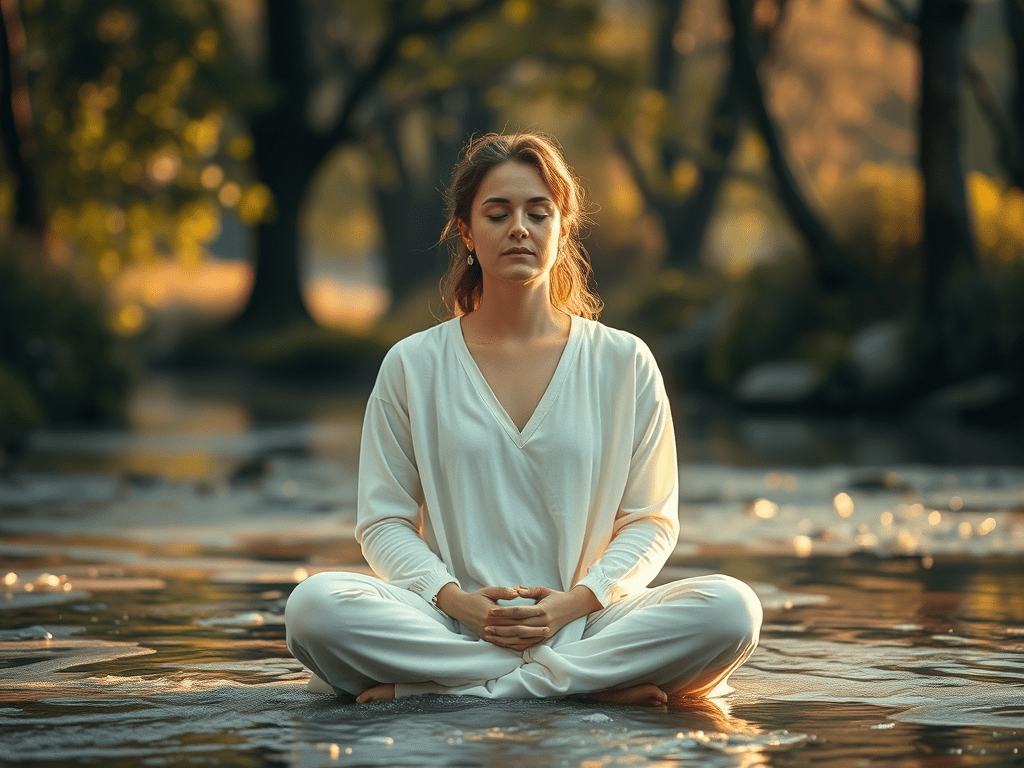
Like Jesus, we can find a place to be alone in nature, such as on a mountain, and talk to God. We might sit in silence with a journal or the Bible, releasing our thoughts to God in prayer. Taking a walk through the forest while keeping our minds focused on God allows us to be open to hearing from Him. We could take a pause before reacting to anything and take a few deep breaths and allow ourselves to feel before we react.
Simplicity is key; whatever helps us rest, find quietness, and redirect our focus to God is the answer. Even in the busiest places, we can find opportunities to be still.
Take a few minutes today to sit in silence and invite God in. What might God be whispering to you in the quiet today?
If you want to keep up with the latest posts, follow Wholeheartedly Faithful on social media or sign up to the email list below.






 Wholeheartedly Faithul
Leave a comment